|
|
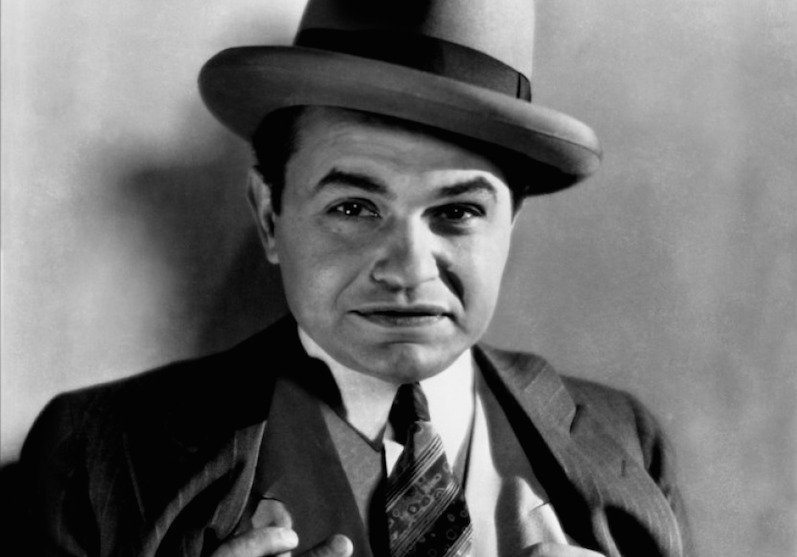
In a conversation that Edward G.
Robinson had with a newspaper writer in Hollywood, he explained that he
hoped that the next picture will be the latest gangster picture that he
needs to play in. His next picture is "Two Seconds." In the first scene
we see him in the electric chair, In the two minutes it takes to prepare
for the execution, his entire life runs through his brain. And here the
scenes that run past are his thoughts, playing out live. The talkie ends
with this, we seem him on the "screen" in the electric chair, a victim
who dies for his crimes.
Robinson hopes that with the
execution it will end his gangster roles. On the stage in new York
Robinson played all kinds of roles, some of them lyrical, soft, gentle,
like his role in "The Kibitzer," or in "Goat Song." In Hollywood,
however, they had him create for a "Little Caesar," a gangster, a
throat-cutter. He already has the roles.
Robinson plays the
underworld heroes so realistically, that there are those in America who consider him such
a type in life as well. Of course this gives him no pleasure.
Robinson is a good artist, an actor
with rare abilities. He does not want to play one and the same role. He
also wants to create for the camera other types and characters. He knows
it. Hollywood meanwhile has not given him the opportunity, and he
hopes to get it.
It is interesting that
Robinson's success has evoked quite a bit of rivalry in the movie
colony. Malicious tongues have tried to provoke certain stars with
gossip about him, spreading rumors that Robinson spoke of them with
contempt. It has gone so far that Robinson found it necessary to issue a
statement that the acts were false, intentional slander. |