|
A review of this play
appeared in the New York Times on November 3, 1987:
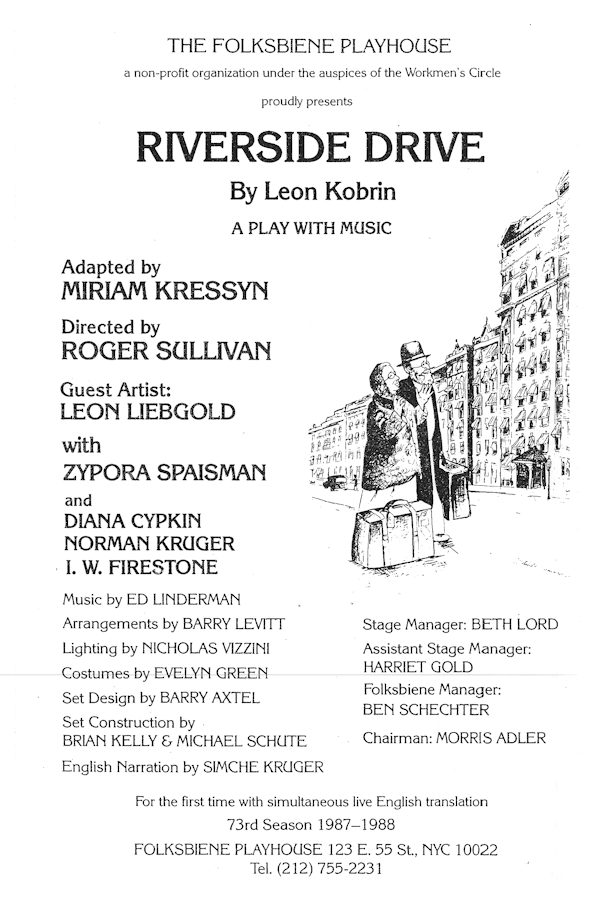
Stage: 'Riverside Drive,'
in Yiddish and English
by Richard F. Shepard
The setting is fifty years
ago, and the question at hand deals with assimilation, with
conflict between old-country Orthodox Jews and their
Americanized, less rigid compatriots. The show, in Yiddish
with lots of English necessarily involved, is Leon Kobrin's
"Riverside Drive," and it is, despite the weighty issues it
tackles, done with charm and humor as this season's
production by the Folksbiene theater.
The play, which opened Sunday,
has been adapted by Miriam Kressyn from what one suspects
may have been a more sober-sided work by Kobrin, who was one
of the prolific Yiddish writers on the American scene until
his death in 1948. Miss Kressyn has done an excellent
overhaul, keeping the main threads but putting them into a
focus that makes for entertaining theater, complete with
several interludes of song thrown in. Roger Sullivan, the
Folksbiene director for several seasons now, has deployed
his bilingual cast in a way that is not only amusing but
also, at moments, touching.
It is a three-generation
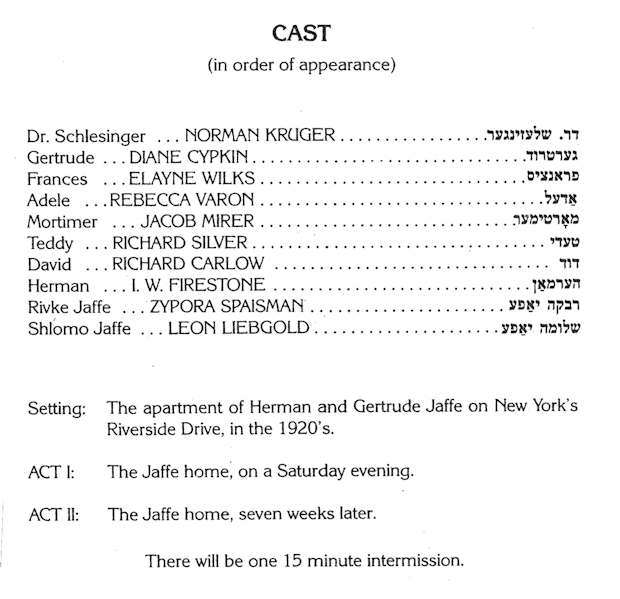
story. Herman (I.W. Firestone), who hails from Eastern
Yiddish-speaking Europe, has succeeded in New York, and,
from the Jewish slums of the Lower East Side, now lives
plushly on Riverside Drive with his wife, Gertrude (Diane
Cypkin), who is the daughter of a hatless Reform,
German-born rabbi. They have an eighteen-year-old daughter
and a thirteen-year old son, both of them ignorant of
Yiddish and Judaism. Into this Yankeefied prosperity,
complete with Irish maid, come Herman's aged parents, fresh
off the boat, green as new pickles and Orthodox to the core
of their being.
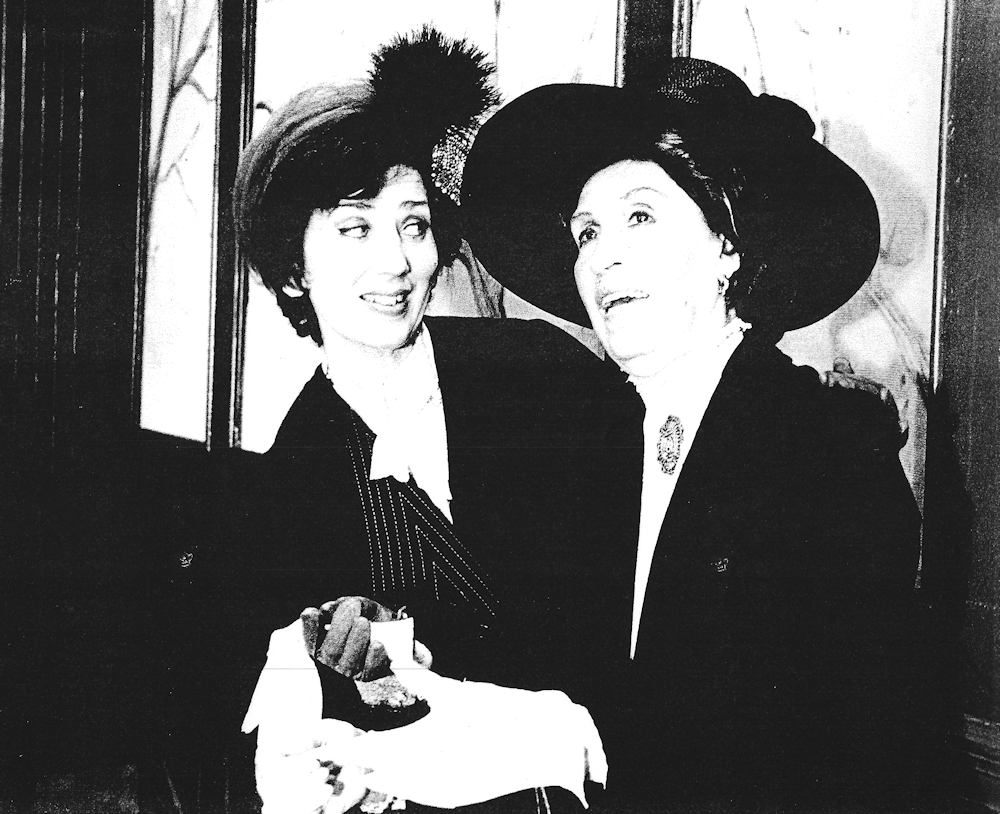
As played by those spirited
veterans of Yiddish stage, Leon Liebgold and Zypora
Spaisman, the old parents emerge as the stars of the play,
what with their wonderment and disillusionment at their new
home in a strange world. There is nothing déjà vu for a
shtetl Jewish grandma when she finds her son lives in a
building where "a general with epaulets" has nothing else to
do but open the door for the residents.
For the first time, the
Folksbiene, taking cognizance of the non-Yiddish speaker, is
making simultaneous-translation radio headphones available,
at a price. On one hand, some adjustment is needed because
actors with strong Yiddish projections can blot out
headphone English with a mere whisper. On the other hand,
"Riverside Drive" has ample English, along with program
notes, so you might not need the device for this play.
The Folksbiene has one gain
fanned the flickering flame of Yiddish theater and brought
us warmth. You want a final irony? The theater in which
"Riverside Drive," with its tale of irreconcilable cultural
differences, performs is in the premises of the venerable
and respected and quite assimilated Reform congregation of
Central Synagogue. That's irony, but everyone does seem to
be happy with it. |