|
A review of
this play appeared in the New York Times on November 7, 1984:
Theater: Singer Drama Staged by
Folksbiene
by Richard F. Shepard
The Folksbiene Theatre's
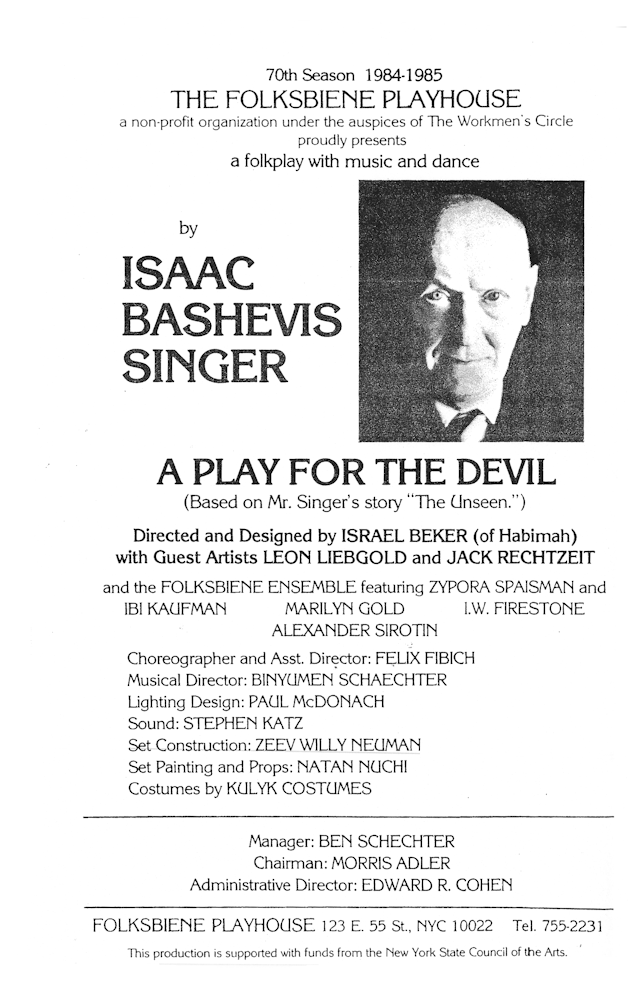
production of the new Isaac Bashevis Singer drama, "A Play for
the Devil," gives a good idea of what appealed to audiences of
Yiddish theater in its golden age. Using, with taste, some
elements of modern theater techniques, it hews to the old
tradition of what serious drama called for.
The Folksbiene has staged,
immaculately, an adaptation by Mr. Singer of one of his short
stories, "The Unseen," a tale in which the Devil sets out to
claim the souls of a couple married for a well-fed, uneventful
fifty years and whose marriage is now ended because the husband
has been lured into divorce by a sexy young maid who then
marries someone else and runs away. The husband is left
penniless to make his way home, only to find that his wife has
remarried a widower with whom she is not happy.
In bringing it from page to stage,
Mr. Singer has modified the story's plot by making what seems to
have been a disastrous ending into a more optimistic one that
indicates love is as old and all-conquering as the Almighty
himself.
It is a long play, sometimes
overlong, that requires, to catch nuances and little humorous
touches, a thorough understanding of Yiddish, although there is
a detailed plot summary in the program. Israel Beker, of the
Israeli Habima company, is director and designer of this
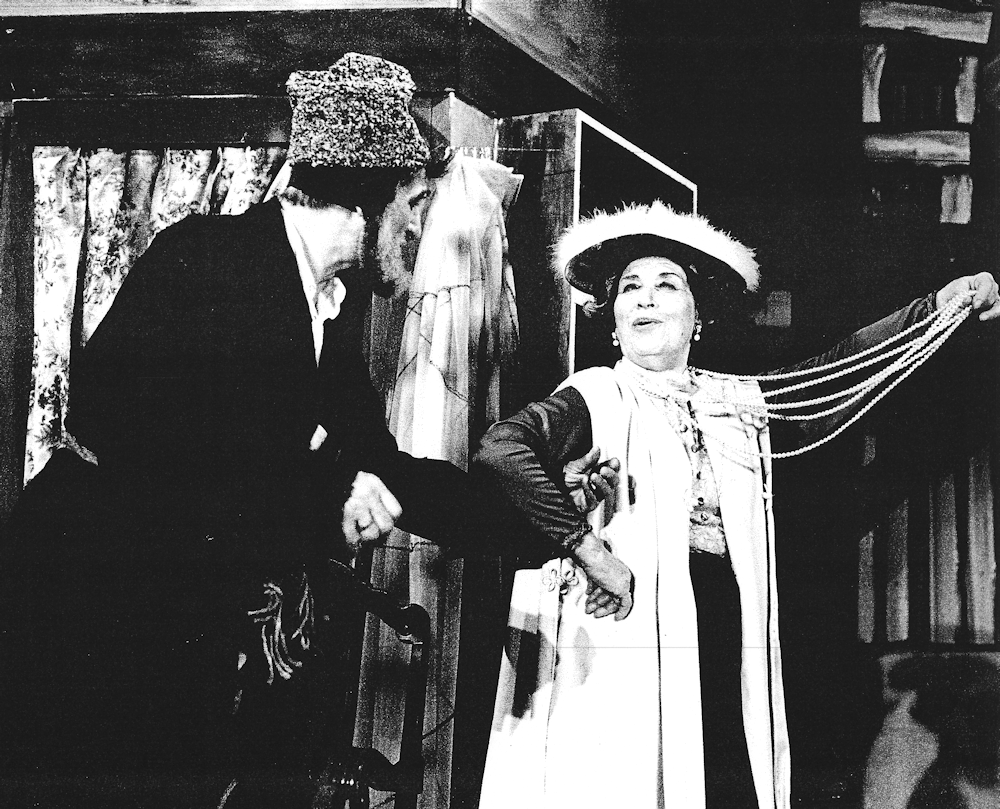
production, and he has lavished imagination and esthetic
know-how in putting it on a two-level stage that effectively
separates the unseen world above, from the workaday world of the
couple's house below.
"A Play for the Devil" is not
Faust, although it is a distant relative, and it is not a play
filled with religious and moral relevance as a story by I.L.
Peretz might be. But as one would expect from Mr. Singer, it is
an absorbing story that in every line tells of intimate
knowledge of Jewish life and folklore, and there is always the
really crisp and finely-drawn first act.
A very fine cast, Folksbiene
regulars and performers who know how to get the most out of a
word or gesture, complement the visual attractions of the
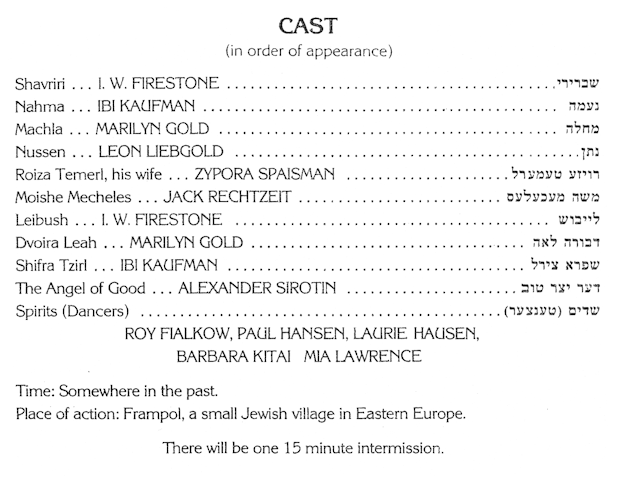
setting. Zypora Spaisman is the very model of a small-town
balabosta, or lady of the house. Leon Liebgold is impressive as
the husband, comfortable in his way of life who is seduced by
the young beauty and eventually returns shattered and regretful.
Jack Rechtzeit gives a convincing portrayal of the somewhat
comic, mercenary second husband, while I.W. Firestone is
versatile as the Angel of Evil and as his earthly incarnation, a
wagoner. Ibi Kaufman is as beauteous and seductive as Salome
herself as the girl doing the Devil's work.
Felix Fibich has choreographed
five black-garbed dancers who serve as "spirits" in a way that
integrates them seamlessly into the action. The set was built by
Zeev Willy Neuman, with eerily appropriate set painting and
props by Natan Nuchi, highlighted by Paul McDonach's lighting
design. Binyumen Schaechter's musical direction provides a
matrix of music that sets the mood for scenes that are wild or
somber, as called for.
"A Play for the Devil" is another
case of the Folksbiene keeping the Yiddish flame alive and
making it burn brightly on its own traditional candles without
sending out for those used to illuminate other tables.
|