|
The following review of this play appeared in the New York
Times, November 25, 1978:
Folksbiene Theater Enacts
Aleichem's 'The Inheritors'
by Richard F. Shepard
All of us, as heirs to the wit and
chuchma of Sholem Aleichem, should be delighted to hear that
"The Inheritors," an adaptation of one of the master
storyteller's short novels, is there for us to share in its
original tongue, Yiddish, these weekends at the Folksbiene
Theater, which is comfortably ensconced at 123 East 55th Street.
This is a happy comedy spun from
the very stuff that used to make thundering old Yiddish
melodrama. Sender Blank is nouveau riche, the man around whom
all the money clings in the town of Berdichev in 1880. When he
gets sick, the mishpucha -- his children and his sister -- begin
salivating over bequests to come. The representatives of the
town's charitable groups, the widows' fund, the orphans aid and
the burial society all wait in the living room of his house. A
rich man alive may be an adornment to a town, but here he means
much more as an adornment framed in a coffin.
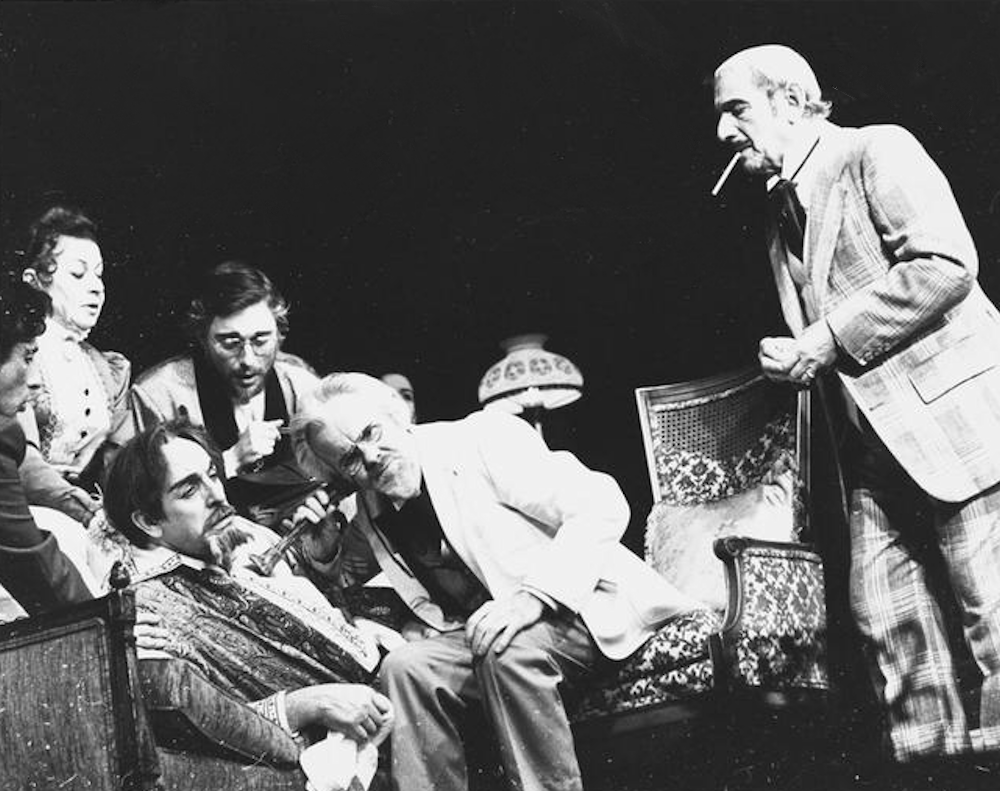
But sender doesn't die. He only
only doesn't die once, he doesn't die several times when he is
felled by other attacks. He ends up, in the play, eating kotchka,
that's duck to you outlanders, and a plate of latkes, which are
potato pancakes. That sort of denouement, one that you can get
your teeth into, has to be a happy ending, doesn't it?
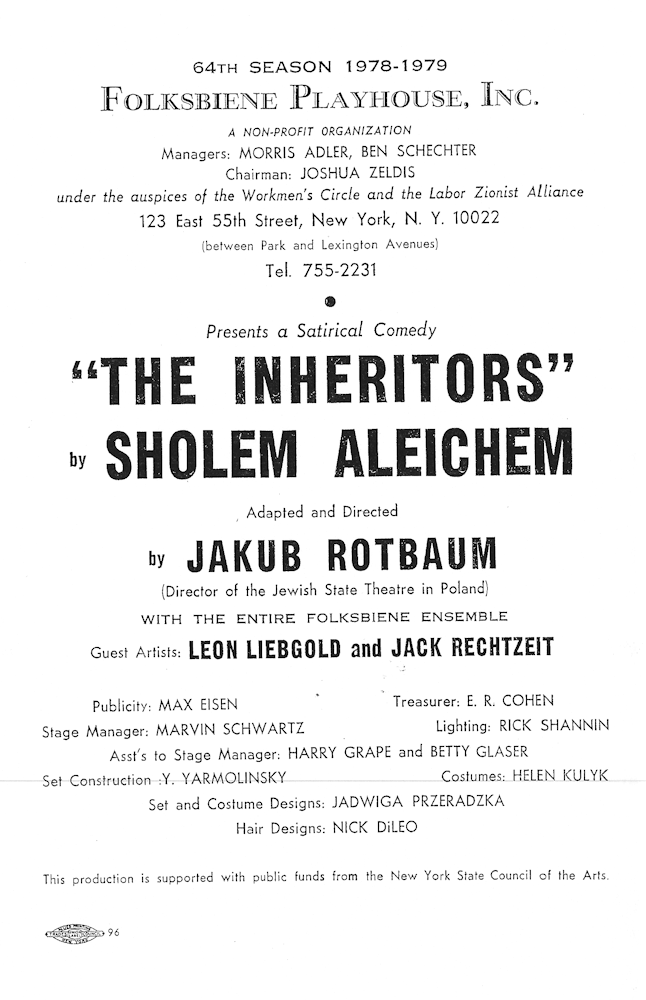
This year's Folksbiene production
has a guest director, Jacob Rotbaum, who came from his regular
chores as director of the Jewish State Theater in Poland to
stage the pla in New York. Mr. Rotbaum has mounted it in his
classic tradition, and this works very well. The lines are
funny, and even its most indignant moments, when Leon Liebgold,
as a pompous but scheming Sender, is at his most righteous, the
undertow of seriousness is flooded by humor. In the way Mr.
Liebgold performs, one gets some of the flavor of the Yiddish
comics that people are always recalling. It is not boffo stuff,
but you laugh.
The cast, in addition to the
overpowering Mr. Liebgold, clearly enjoys its work. Jack
Rechtzeit is a master comic as a foppish, Russified -- he keeps
saying "ponimayet" and "pozhaliste" -- son-in-law of the type
that must have been very familiar to the author in his native
Ukraine. Joshua Zeldis plays a physician who is laughably
incompetent. Mina Kern is the wife, and that irrepressible comic
figure of the Yiddish stage, Zypora Spaisman, adds to the fun.
Jacob Gostinsky is a bankrupt who is trying to marry his
daughter off to the rich family.
A terribly sad blow for the show,
for Yiddish theater and for those who love it, was the sudden
death Thursday of Shmuel, or as he was better known, Shmulik,
Goldstein, long a marvelous and mirthful figure onstage, who had
a role in "The Inheritors" as one of the community figures
waiting for the windfall. As usual, he carried off the part with
zeal and humor and professional skill. An obituary notice will
be found elsewhere in today's newspaper.
There are a number of attractive
young people in the cast, a development that is good to see in a
performance of Yiddish.
This is the 64th consecutive
season of the Yiddish Folksbiene, and there's not much else
around in the same line in New York to match it. Now, if the
Vivian Beaumont wanted a tenant that's reliable ... but that's
another story. Meanwhile, you can see "The Inheritors" Saturdays
at 8 p.m. and Sundays at 2 and 5:30. It's worth a trip. |
|
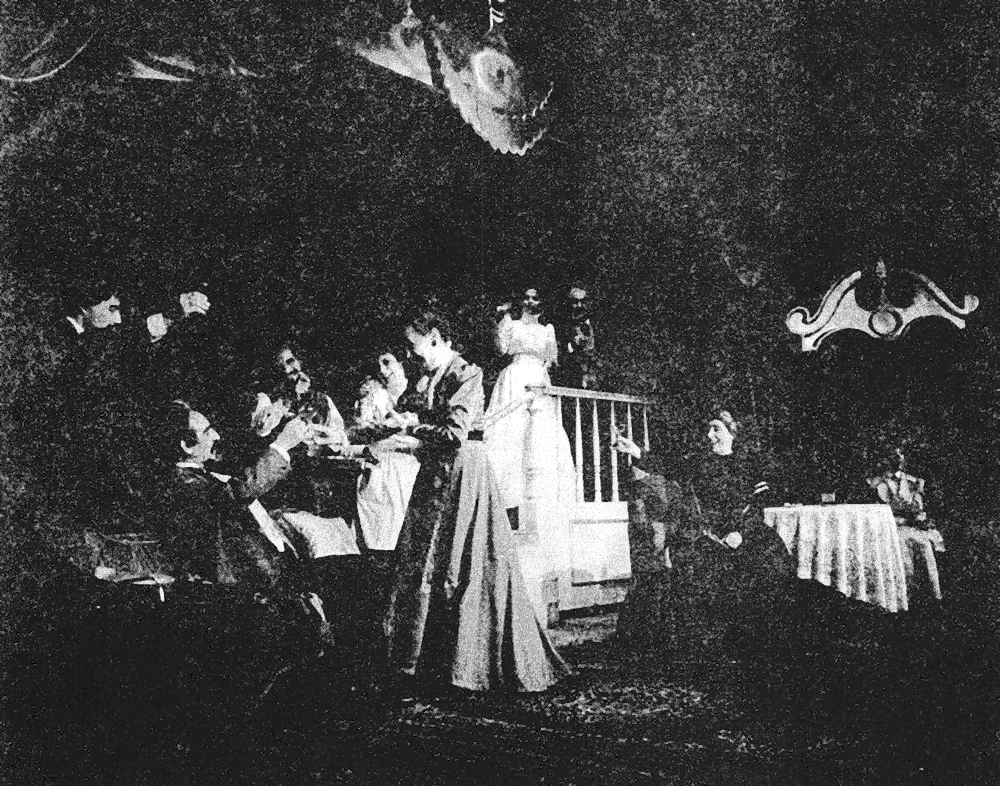
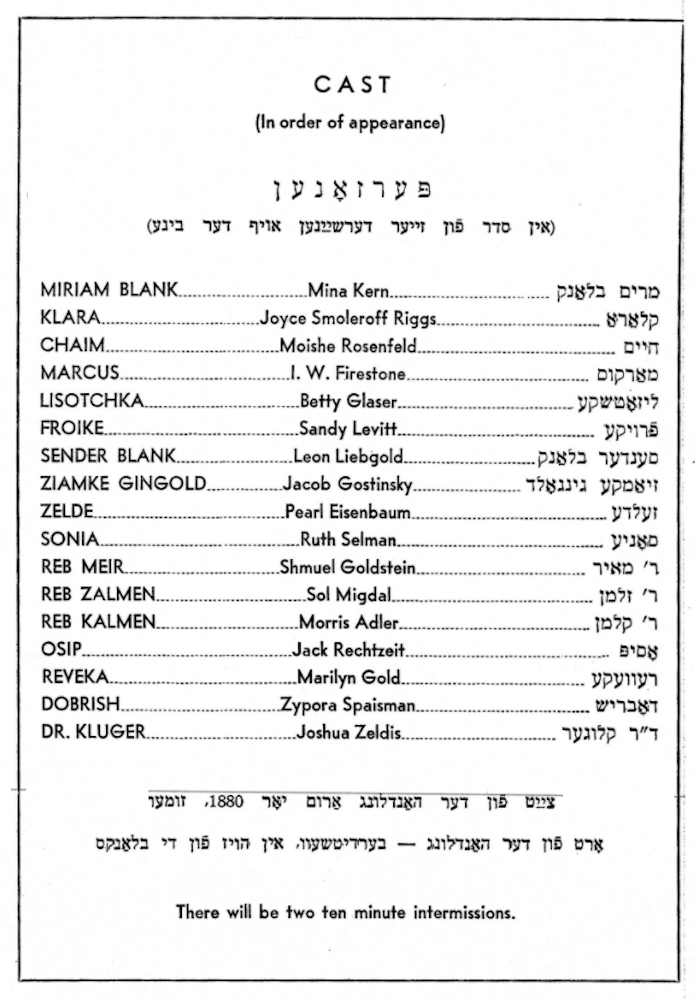
The Cast of Characters: |
|
The Program Synopsis
(incomplete): |
|
|
|
Sender, however, refuses to give in to death.
As Sender stubbornly clings to life, he keeps his
entire family on edge, since their financial future
hangs on his death.
Osip, afraid Sender will die without a will,
further complicating matters, wants to persuade the
sick man to sign one. The rest of the family
disagrees violently with the terms Osip proposes.
During the family quarrel which ensues, Sender
enters the room.
Needless to say, he is hurt and upset by the
family's fighting over his money before he is even
dead. They seem more concerned with his assets than
his health.
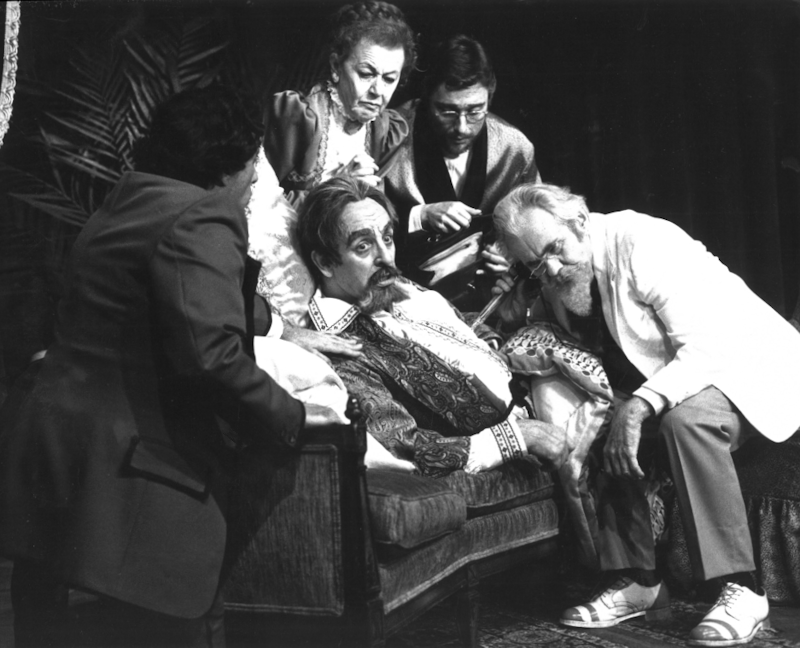
Dr. Kluger arrives, examines him and diagnoses
Sender's diet as the cause of the illness. Sender,
who refuses to believe he may be dying, laughs off
the doctor's diagnosis, and sends him away.
Sender rants against the entire town for
anticipating his funeral; family and friends alike.
His fury turns into hysterical laughter, which
causes his collapse, to the shock of the assembled
people.
Again the charity organization representatives have
come to Sender's home to keep vigil, hoping to hear
Sender's will. They quarrel among themselves, and
in the midst of their quarrel, the supposedly dying
Sender reappears. He is completely recovered.
The representatives cannot hide their
disappointment, having anticipated his death and
huge bequests to their various charities. To their
astonishment, and the chagrin of his family, Sender
reassures them. He will give generously to the
charities. He confides that when he thought he was
close to death, he made a secret vow to donate
generously to them all if his life was spared, and
he will keep that pledge.
Osip and the other family members, as eager for
their inheritance as were the charity people, grow
enraged. They feel it is THEIR potential money he
is giving away.
Osip suggests his father-in-law has lost his mind.
Sender now faces his family, regarding them for
what they are. He declares they have only come to
see him die and inherit his fortune. That is all he
is to them: Money.
His final statement is, "I am alive; you came to
early; to spite my enemies, Sender Blank is alive."
|
|