Visit                  Exhibitions                    Collections                  Research                  Learning                  About                  Site Map                  Contact Us                  Support


A History of The Folksbiene


Father Holds Court
by Isaac Bashevis Singer
 

1957-1958 Season

Radin Auditorium
128 Stanton Street
New York, NY


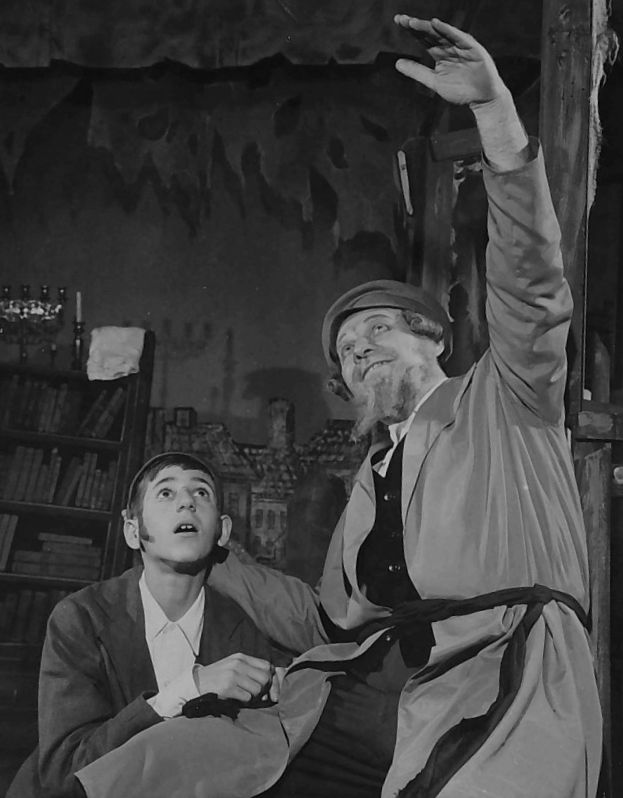
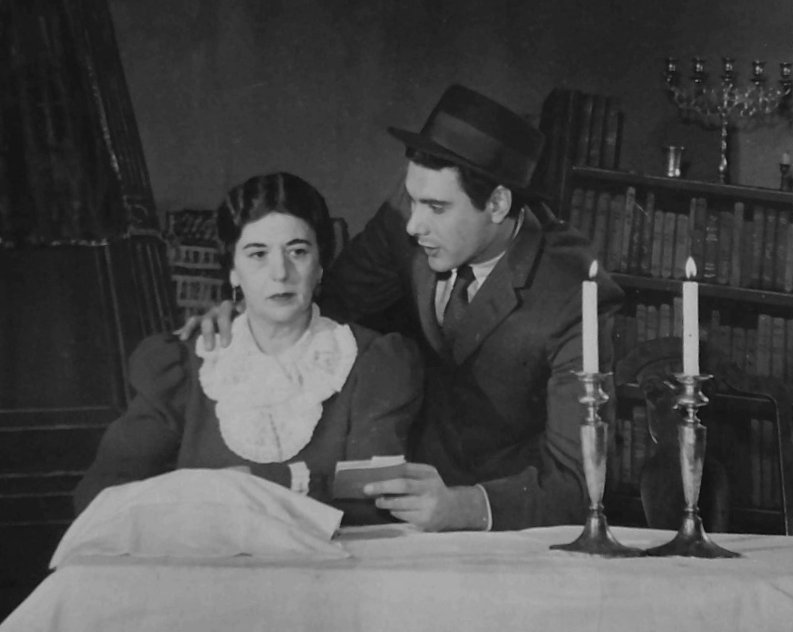
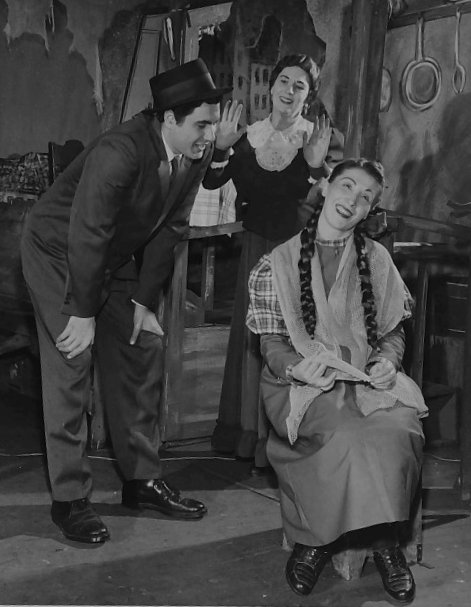
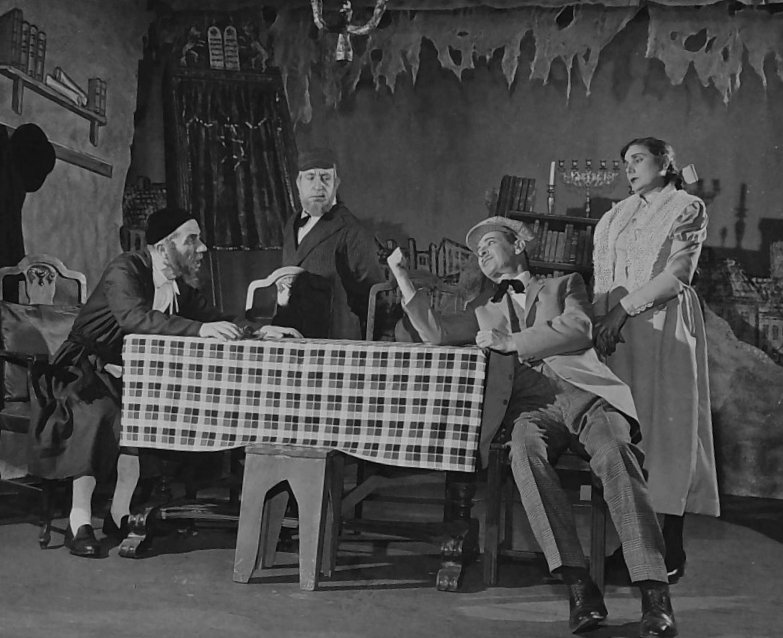
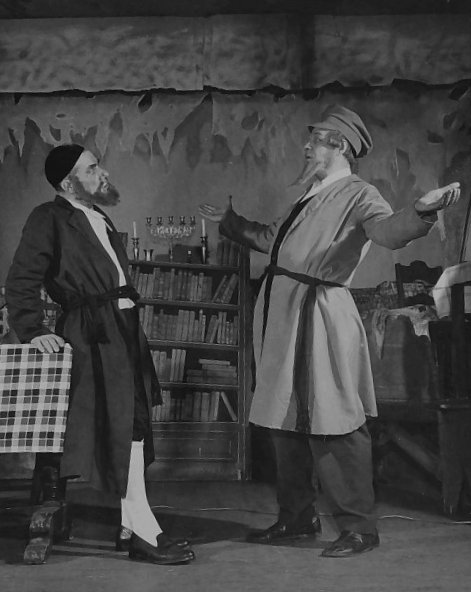
On November 30, 1957, in the Radin Auditorium, under the direction and dramatization of David Licht, there was staged Mayn tatns beys din shtub (Father Holds Court), by I.J. Bashevis, which was played on fourteen weekends.

About the production, Leon Kristol writes:

" ... It has been many, many years since our stage has seen such genuine Jewish people, and that such truly brilliant dialogue has been heard.

... In addition, for many, many years now, there has not been a performance in our stage, which has had such a successful combination of almost classical content and modern form as this presentation, which David Licht has accomplished with the modest, but quite extraordinary troupe of the Folksbiene,  and with the smallest of technical means that can still be imagined."

Dr. L. Fogelman writes:

" ... Naturally, in his dramatization, Licht could not include all the images and types of people that Bashevis painted in his remarkable book ... But in general, all the scenes and images of the two acts are very coherent and bound together, and Licht deserves full recognition both for his dramatization and for his well-thought-out production, which reveals to us his talent and his creative imagination as a director. This acting of the troupe is quite good. It is an exceptional ensemble of actors who together create a needed harmony."

Elihu Shulman remarks:

" ... David Licht's production is not of one style. It possesses both realism, as well as a little modernism, as well as the grotesque. The actors speak in various dialects. ... The production ... is generally a serious one. The acting is very good. All of the participants are serious about their work ... The production affords many pleasures. The Arbeter Ring is to be praised for supporting the Folksbiene, as well as the accolades of the Folksbiene's idealistic work."

S.D. Singer writes:

" ... It is a production that makes us think of the 'Yiddish Art Theatre' ... in the twenties. The good director, the honest acing of the Folksbiene troupe raised hopes that it is not too late to do something, to bring back to life the creative Yiddish word on the Yiddish stage."

And Chaim Ehrenreich writes after a revival of the production:

" ... Nevertheless, it is not a drama in the sense of the word. It does not possess dramatic mood and does not possess violent conflict -- not in its growth and development of characters -- and yet it keeps the viewer fixed to his place and his eyes fixed on the stage. And yet the audience member leaves the theatre nourished and satisfied. ... The secret lies in the truth of the piece, in the profound sincerity with which Bashevis portrays the lives of the people. ... And the actors have exhibited their sincerity and love for the author. The stage director Licht has merged two elements into one harmonic whole, and there is a well-kept, well-rounded notion that is rarely seen on the Yiddish stage."


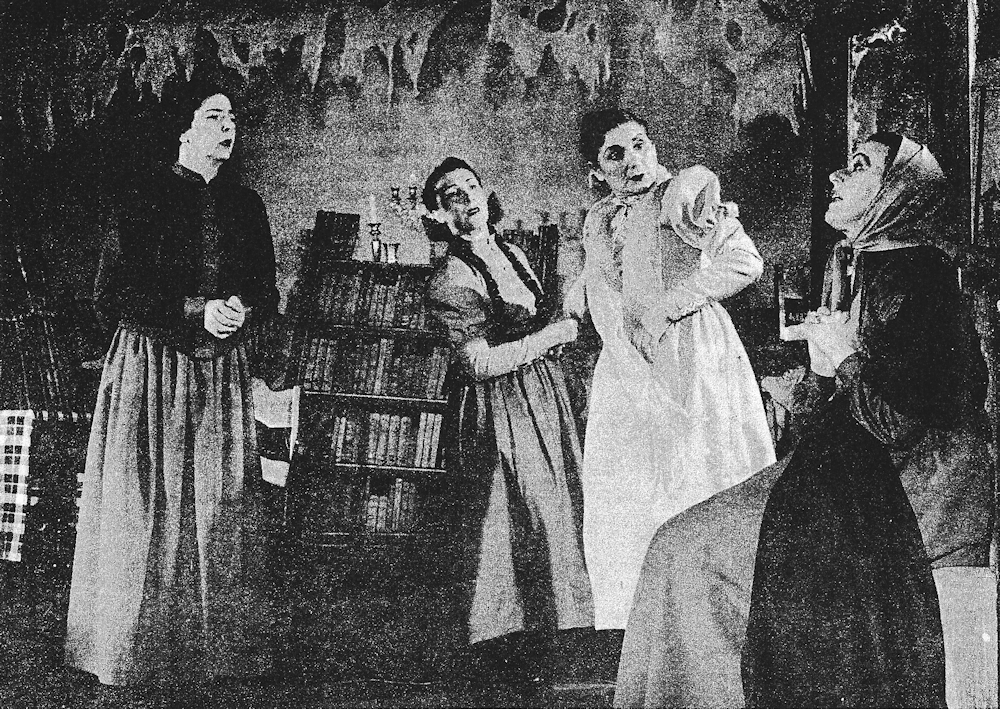
From the right: Mina Kern, Anna Faust, Zypora Spaisman and Bronia Newman.
Courtesy of YIVO.


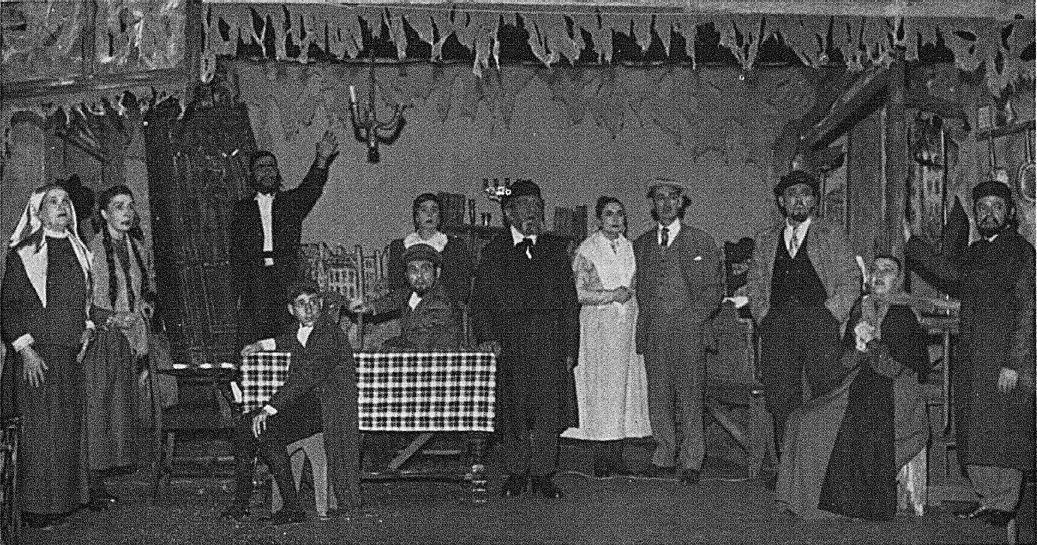
Theatre still from "Father Holds Court"
Courtesy of the "Lexicon of the Yiddish Theatre," Volume 3.


Cast of Characters: Synopsis:


The Teller of the Story
The Father
The Boy
Moshe the Tinsmith
Chaim From Gorshkow
Moshe Bababa
The Mother
Mirele
Rivka
Zishele
The Older Son
Mendele
Raiche
Zurach
Debora-Chave
1st Litigangt
2nd Litigant
Abbele
Magtes the Chasid

...
...
...
...
...
...
...
...
...
...
...
...
...
...
...
...
...
...
...

* * *
Leo Pshepurka
Burton Pinchuk; Anton Goldberg
Morris Alder
Joshua Zeldis
Ben Feivelowitz
Bronia Newman
Zipora Spaisman
Sarah Stabin
Louis Fishberg
Michael Karlan
Ely Aurnou
Anna Foust
Jacob Belagorsky
Mina Kern
Harry Friefeld
Louis Fishberg
Joseph Silberberg
Michael Neiditch

Scene 1.

It is Saturday evening. The teller of the story presents his home, the "Beth-Din" chamber, (a local Jewish court-house) on Crochmalne Street in Warsaw. He introduces his father, the "Moreh Horoeh," (a designated neighborhood authority on Jewish law), his mother, the frequent visitors to the home, and himself, still a child at the time. Mirele comes to inform the neighborhood's opposition to the divorced that the old Man Zishele and his wife Rivka had applied for. Father sends for the couple. Mother joins Father in talking them out of the divorce. They leave disappointed.

Scene 2.

The older brother is a reader of worldly literature and has a sophisticated view of life.

It is obvious that the father and the older son have entirely divergent views of life which often results in conflict between them.

Mendele, a bridegroom, comes in to apply for a release from his engagement with Raitche. The Moreh Horoeh proposes a peace settlement between the bride and the groom.

Scene 3.

Moshe the Tinsmith is leaving for the Holy Land. The neighbors gather to wish him a proper farewell. Moshe departs for the land "where up-to-date young people build colonies while they speak loshn-kodesh (the holy tongue)," even on weekdays.

Scene 4.

A Saturday evening on the Crochmalne Street is disrupted by tragedy -- a shoemaker's apprentice poisons himself. The unfortunate mother comes to the Moreh Horoeh to beg him not to allow the kehilla (the Jewish community body) to bury her son in disgrace.

Later that night our young story teller is deeply disturbed by the cries of the bereaved mother ringing in his ears. He wants to know what God will do to the suicide in the other world. "Wouldn't He forgive him even for such a sin as taking his own life?"

Scene 5.

An unhappy letter arrives from the sister who lives with her husband in Belgium. Her husband is not working and she can hardly feed her child. Father comes in with latest street gossip;  -- a new group is being organized; anarchists, who want to abolish money and forthwith  make people happy. Mother breaks into tears over the distress of her daughter and shows the letter to father who seems only to be occupied with foolish dreams and the world beyond.

Scene 6.

Three purveyors of some illegal goods have come in to ask father to pass judgment on something among them. Father doesn't even know what they are talking about. From the street there is heard a noise and excitement. It seems that a Crown Prince has been assassinated somewhere and war is about to break out. Mother and father lift their heads in prayer to God to spare the world from bloodletting and destruction.

Scene 7.

The older son is away at war and Mother prays for him nightly. Father pleads with her to take food and try to sleep. At night she is haunted by a vision of her son running through fire and devastation and returning to her. Shortly after her vision becomes a reality.

Scene 8.

It is Friday evening. Mother is getting ready for a visit to her father in Bilgorray. But she fears that he may no longer be alive. Mirele, the baker's daughter, has brought a challah so that the Moreh Horoeh will have something over which to say the Sabbath prayer. Mattes cannot go home because he has no challah over which to say the prayer. Mother gives him the challah. Raitche hurries in with some wine for the kiddush. Father make kiddush and the Holy Sabbath enters into the home-court. It enters in a spirit of hope and faith, in justice and peace.


next >>


Copyright © Museum of the Yiddish Theatre. All rights reserved.