-
Credit Line
-
Museum of the Yiddish Theatre
-
Testimony
-
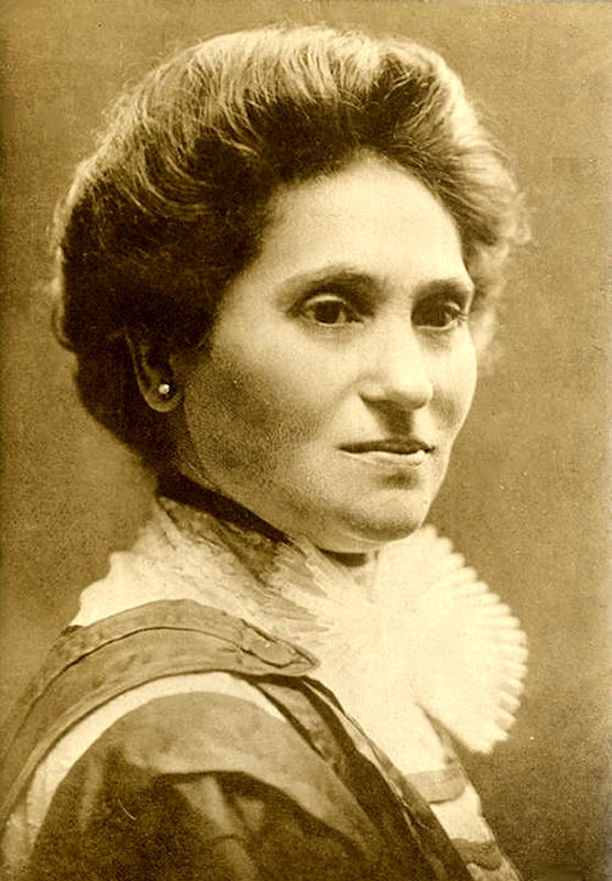
"... She acted according to her
feelings, according to what she believed' This is how she
behaved. I am sure that her modestly restrained nature
hindered her from being one of the greatest opera and
concert singers. She would positively stand in the ranks of
a Patti, Sembrich, Tetrazzini; her voice was rich in color,
strong, sonorous, and she had from her nature a trained
tone, as is the case with all of the great opera singers.
Her voice was dramatic and at the same time flexible, like a
true lyric soprano -- After her singing number, the theatre
used to hear screams and applause, but she used to go into
her [dressing] room to sit and look at a book, or do
something for her home. She refused to play on Rosh
Hashanah, and when she could not help herself and continued
to play, one had to wait until the next performance before
she came home from the synagogue, which she had become
accustomed to and where she prayed earnestly to God."
-
Source of Testimony
-
Joseph Rumshinsky -- "Joseph Rumshinsky
Tells About Fifty Years of Yiddish Theatre," Forward,
February 12, 1952.