|
Uriel Mazik's
Picture Gallery of Our Yiddish Actors |
||
|
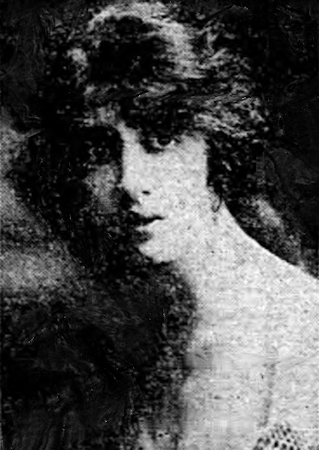
2. -- Frances Adler |
|
|||
| The hardest thing for an artist is to be honest,
so that every word, every wrinkle, every breath should be
true. Many who are generally real people ... they take the
pen in their hand and begin to say the opposite of the truth. The
language is inflated, eloquent, cynical, you read it, there
are thoughts, content: but something bothers you, and you
return with a vexation -- it's not true. Actors, mainly Yiddish actors, suffer from this floor much more than the writer. Due to many reasons, this kind of act, this kind of a way of bringing out the words that shock a person with better taste, has taken root in the theatre. Frances Adler plays the role of a young, naive young woman whose figure is not so bad at all. -- Here her own youth helps her out. But why shout? Does this add up? In the the ecstasy of love, on the threshold of happiness, there is a man, and [there is] still a young pure girl, drunk, a fairy tale. One cannot bring out this feeling through words. A look, a smile, a quiet sigh, a shiver, and it is enough. How wrong does the phrase sounds: "Oy, how one experiences the reverend." [?] This is vulgar and I don't like the reality. No matter how excited by passion a girl in love may be, she does not show it to her lover so openly; the feeling of exhaustion will not allow her to do this. But that's why he won the moment, when the father tells you the gospel, that the man she is engaged to is married. For a little while, for an instant, she stands frozen and watches her father's face disappear. Everyone then considers the breath to be a resurrection. We hear how one woman did something to the other with passion.: -- Wow, good job. But the exaggeration quickly puts an end to the good impression. She puts her hand over her father's face. This is unnecessary. This just doesn't say anything, it's just an additional effect The scene of how she approaches him was good, very good. It was a pleasure to see how the young woman carried herself around the room. This has a quiet contentment that dominates a young being. Her voice quivering with happiness, she shyly says that the few days that he was gone seemed like an eternity to her. But again the problem is that as soon as the man finds out about the lost handbag [?] and he starts looking at her with suspicion, and it becomes unnatural, -- much too built up, too many phases made up. The way she perpetuates herself in the realm has nothing to do with art. No, this was not artistic. The woman Mae is an honest woman after all, a true mother, with character. She still fought hard and bitterly. The thought itself is a sign of her strength. She sacrificed herself, she knows, she knows that this is a sin against morality. She is, after all, a woman from the petty-bourgeois world, with all its precepts and customs. Cheating on the bridegroom is a terrible sin. And she does it, and because he doesn't, he gets upset. She sacrifices herself for him. She is already not an innocent young girl. Just a person who has been through a lot. A hardy, very experienced person, she needs to be able to speak, explain, even tell lies; she needs to be able to. But Frances Adler obviously has not understood this. She has brought out a frightened soul, a comic figure, a hysterical wife, a worthless being to which we feel so little sympathy and so many regrets. And besides all of this -- the declamation. But for the cursed declamation. This is the mistake that eats up so much artistic talent: they should know how to speak, to speak like people and not to sing out the words. or they laugh, they don't sing, they don't cry for a week with singing ... Frances Adler declaims too much. Speaking for the judge and for the jury, she makes this so pathetic, so excited, that you want to laugh. It sounds false; in any case, it does not help her husband. Frances Adler, without a doubt, has talent. Partly it is her acting in a very pleasant manner.She has a fine transition. And she demonstrates an artistic fire. Despite all of this, she is weak and raw. She needs to discipline herself. Throw away the shouting, the singing, it will feel natural. She must learn to understand people. Nevertheless she is young. She has temperament, and we are sure that she will rise quite high with time, but she must take her task more seriously. Copyright © Museum of the Yiddish Theatre. All rights reserved. Image Use Policy |